flatMap in JavaScript
As a React Native developer with over four years of experience, I often come across JavaScript methods that can simplify our code. One such method is flatMap().
flatMap in JavaScript

🔥 Read for free 👉
As a React Native developer with over four years of experience, I often come across JavaScript methods that can simplify our code. One such method is flatMap().
It’s simple yet powerful, especially when working with arrays.
What is flatMap()?
flatMap() is a combination of two methods – map() and flat(). It first maps each element to a new array, then flattens the result into a single-level array.
Here’s a simple example:
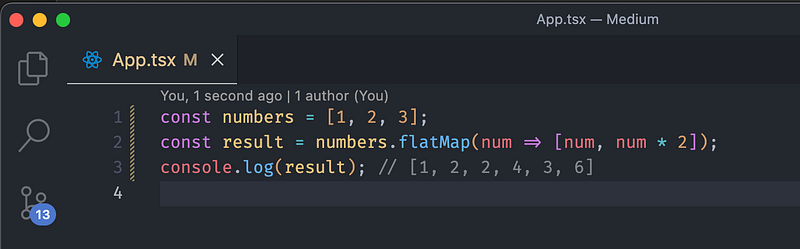
Instead of returning an array of arrays like map() would, flatMap() automatically flattens the result by one level.
Why Use flatMap()?
- Simplifies Nested Arrays: If you’ve ever used
map()followed byflat(),flatMap()makes it cleaner. - Performance Optimization: It’s slightly faster than using
map().flat()separately. - Useful for Data Transformations: When working with APIs, sometimes we get nested data that needs restructuring.
Real-World Example in React Native
Let’s say we’re fetching a list of users, and each user has multiple posts. Instead of working with a nested structure, we can use flatMap() to get all posts in a single array.
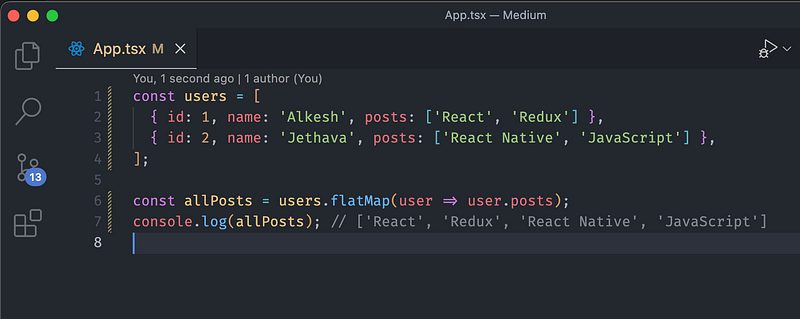
This is much cleaner than using map().flat().
When Not to Use flatMap()
- If you don’t need to flatten the array, just use
map(). - If deep flattening is needed (more than one level),
flatMap()won’t help. Useflat(Infinity)instead.
flatMap() is a small but powerful method that makes working with arrays easier. As a React Native developer, you’ll often deal with transforming lists, API responses, and nested data. Using flatMap() can make your code more readable and efficient.
Next time you find yourself writing map().flat(), try flatMap() instead!
Did you find this helpful? Give a Clap and Share it with your friends!
For more updates: subscribe to my medium account.
Thank you for reading 😊